WaveMaker Grants 2026: 12 Miami Artists Share $60,000
Twelve Miami artists and collectives were chosen from 115 applicants to share $60,000 for work staged in a Coral Gables bar, on basketball courts, and on the shoreline.
 By Lucas D. Boccheciampe · August 25, 2026
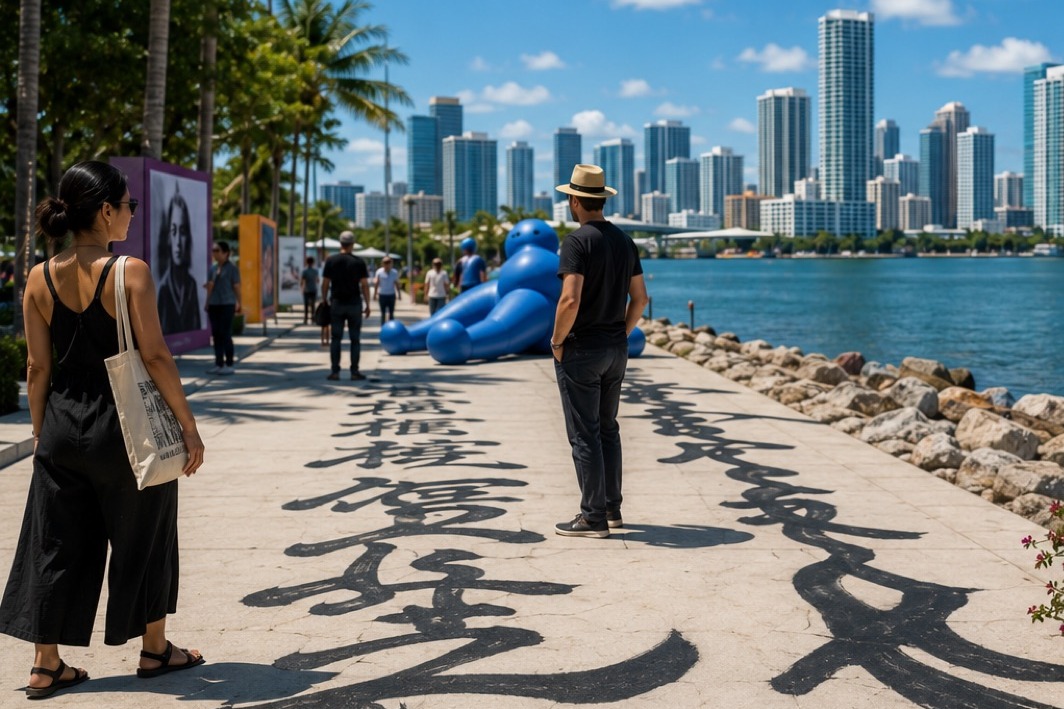
One hundred fifteen applied. Twelve got the money. Not one of them is hanging anything on a white wall.
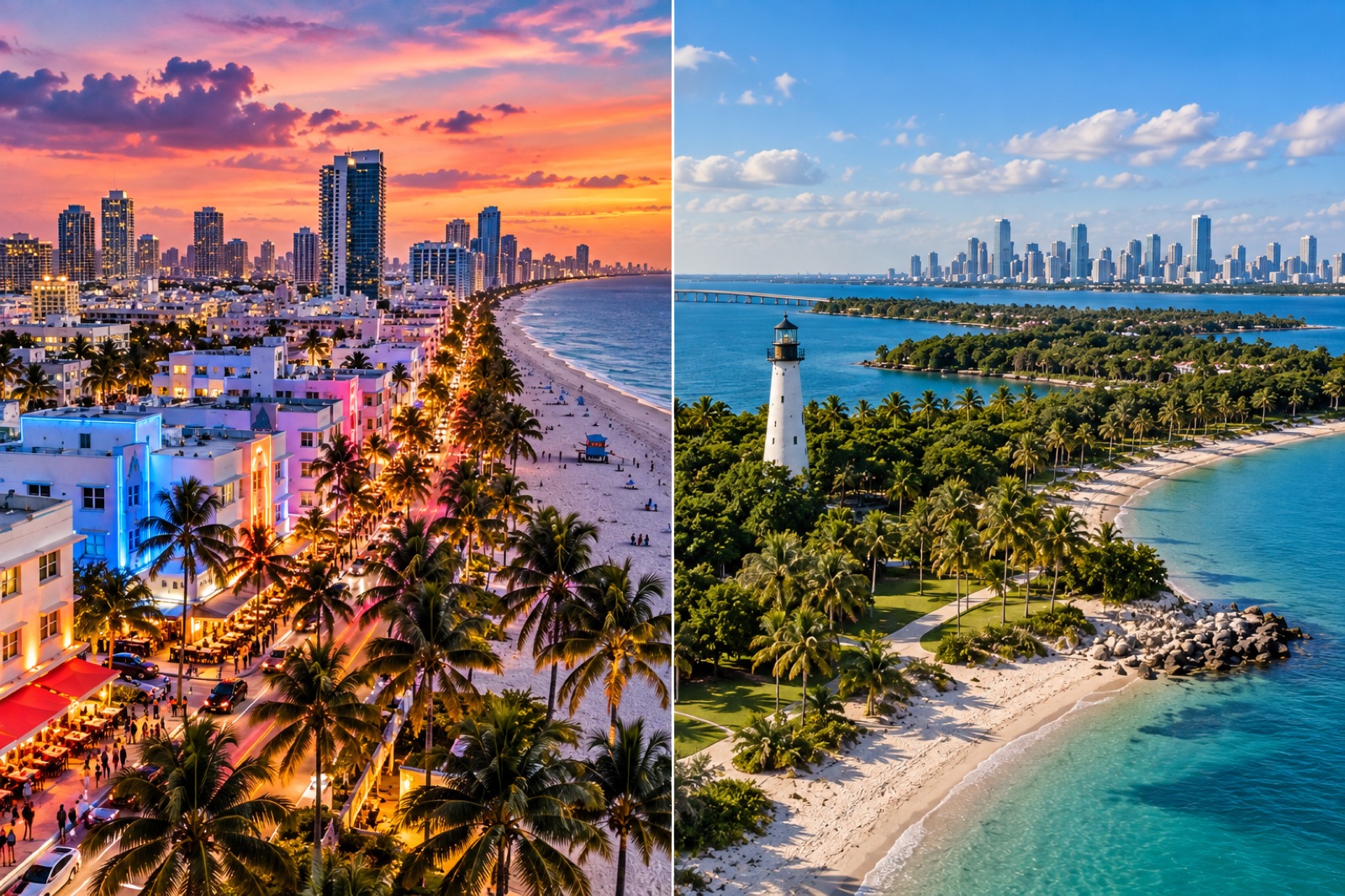
The WaveMaker Grants 2026 cycle has named twelve Miami-based artists and collectives who will share $60,000 to build work where most people would never think to look for it. A Coral Gables bar. Outdoor basketball courts. Parking lots. A sports field. The concrete pathways along Miami's shoreline. According to The Andy Warhol Foundation for the Visual Arts, this marks the program's eleventh year.
WaveMaker Grants 2026 by the Numbers
Three figures set the frame.
115 applicants, 12 funded. The selection rate reads like a graduate program, except the prize is a production budget instead of a diploma.
Up to $6,000 per grant. Recipients were selected across three categories. Per the official WaveMaker Grants site:
- New Work / Projects ($6,000): larí garcía and Sue Montoya, Lisa Kusanagi, Bex McCharen, Najja Moon, Ọmọlará Williams McCallister, Enrique Villacreses, Luka Gotsiridze
- Long-Haul Projects ($6,000): Isabella Bru
- Research + Development ($2,000): Nicole Combeau, Orlando Estrada, Oscar Rieveling
- Implementation ($4,000): Teri Watson
$750,000 to 152 recipients since 2015. That is the Warhol Foundation's cumulative tally for WaveMaker across Miami artists, curators, and collectives.
Why the Money Goes Where the Galleries Are Not
Locust Projects Miami has administered WaveMaker since 2017, though the program launched in 2015. Projects were judged on conceptual rigor, local relevance, community impact, feasibility, and one criterion that quietly does most of the work: whether the finished piece would be free and publicly accessible in an unconventional space.
Eligibility for most categories also required that applicants had not received a WaveMaker grant in the previous five years. Translation: the same twelve names cannot keep showing up every cycle.
That combination is the thesis. Miami's art economy is loudest when the fairs are in town. WaveMaker funds the rest of the year, and it funds it at street level.
The Twist: This Year's Slate Is a Climate Show in Disguise
Read as a group, the 2026 slate is unusually coherent. Half the projects deal directly with water, coastline, or climate. Kusanagi's evaporating text. McCharen's shoreline rituals. Watson's sargassum blocks. Rieveling's eroding beach.
Several others take on the economics of staying in Miami at all, from McCallister's speculative local currency to garcía and Montoya's elegy for vanishing gathering places. When artists start designing their own money and mourning the neighborhood bar in the same funding cycle, that is not an aesthetic trend. That is a cost-of-living report with better production values.
The Takeaway
None of this is built for a white-walled room. That is the program's design, but it also reflects how Miami artists are actually working: outward, into public space, on budgets that assume no institution is coming.
The fairs and the museums are not going anywhere, and neither is the money that moves through them. But a $6,000 grant and a public basketball court is a fundamentally different bet than a booth, which is exactly why the economics of emerging artists are worth watching more closely than the auction results.
In a city where square footage is the local religion, twelve artists just got paid to work in the space nobody is charging rent for.
The Twelve Funded Projects
- **larí garcía and Sue Montoya, Reasoning and Feeling.** A sculpture and photography exhibition inside Coral Gables' Seven Seas Bar, responding to the disappearance of "third spaces."
- **Lisa Kusanagi, Until My Ocean Dries.** Using a monumental calligraphy brush and ocean water, Kusanagi inscribes poetry onto coastal pathways that Miami's heat erases as onlookers watch. Planned for early 2027.
- **Bex McCharen, Queer Atlantics.** An experimental documentary and oral-history archive of trans and gender-expansive communities who gather around water, ending in a shoreline screening and collective ocean soaking ritual.
- **Najja Moon, Movement Studies.** Art history taught on outdoor basketball courts across Miami-Dade, recorded into a free online series.
- **Ọmọlará Williams McCallister, CREAM.** A speculative local paper currency designed to keep money circulating within Miami communities.
- **Enrique Villacreses, NIJI: BLUE.** A sports field transformed into a monochromatic landscape of performers and inflatable sculpture, with a drone livestream revealing the composition from above.
- **Luka Gotsiridze, GO TO BED.** Paper sculptural installations asking what it means to have never had a bed of one's own.
- **Isabella Bru, We Are Permitted.** The monthly pop-up series turning parking lots and transit hubs into free open-air galleries. Founded October 2025, it has already run in Allapattah, Downtown, Medley, Kendall, and Tamiami. Artists never pay to participate. The public never pays to attend.
- **Nicole Combeau, Ritual Afterlives.** Archival research into how colonial-era texts depicted ritual and belief across the Americas, building toward a public counter-archive.
- **Orlando Estrada, Spirit Radio.** A room-sized installation built from server cages, quartz crystals, and antennas, reworking surveillance technologies into instruments of ancestral memory.
- **Oscar Rieveling, La Diosa de Oro.** A performance drawing on Peruvian-Chilean bullfighter Conchita Cintrón and the engineered ecology of Miami Beach.
- **Teri Watson, SEED Erosion Blocks.** Invasive sargassum seaweed converted into modular concrete blocks that stabilize shorelines while functioning as public art.
Frequently Asked Questions About the WaveMaker Grants
What are the WaveMaker Grants?
An incubator program administered by Locust Projects, supported by the Andy Warhol Foundation. It funds Miami artists to make experimental work that is shown free to the public in non-traditional venues.
How much does each recipient receive?
Up to $6,000. New Work and Long-Haul recipients received $6,000, Research + Development recipients $2,000, and the Implementation grant $4,000, for a total of $60,000.
How much has WaveMaker awarded overall?
$750,000 to 152 Miami artists, curators, and collectives since 2015.
Who is eligible for these Miami artist grants?
Applicants must be Miami-based and, for most categories, must not have received a WaveMaker grant in the past five years. Guidelines are posted at wavemakergrants.org.
Where can I see these projects?
Locations vary, and several are still in development. Bru's We Are Permitted runs monthly, with neighborhoods announced in advance. Kusanagi's coastal work is slated for early 2027.
Lucas D. Boccheciampe
Publisher of The Standard · Broker, Vantage Luxury Real Estate · Key Biscayne