Can a Dress Be Worth $1 Million? The McQueen Auction, Explained
A Naomi Campbell Alexander McQueen ensemble carries a $600,000 to $1 million estimate at Fair Warning. Here is what is actually being sold, and what is not.
 By Lucas D. Boccheciampe · October 15, 2026
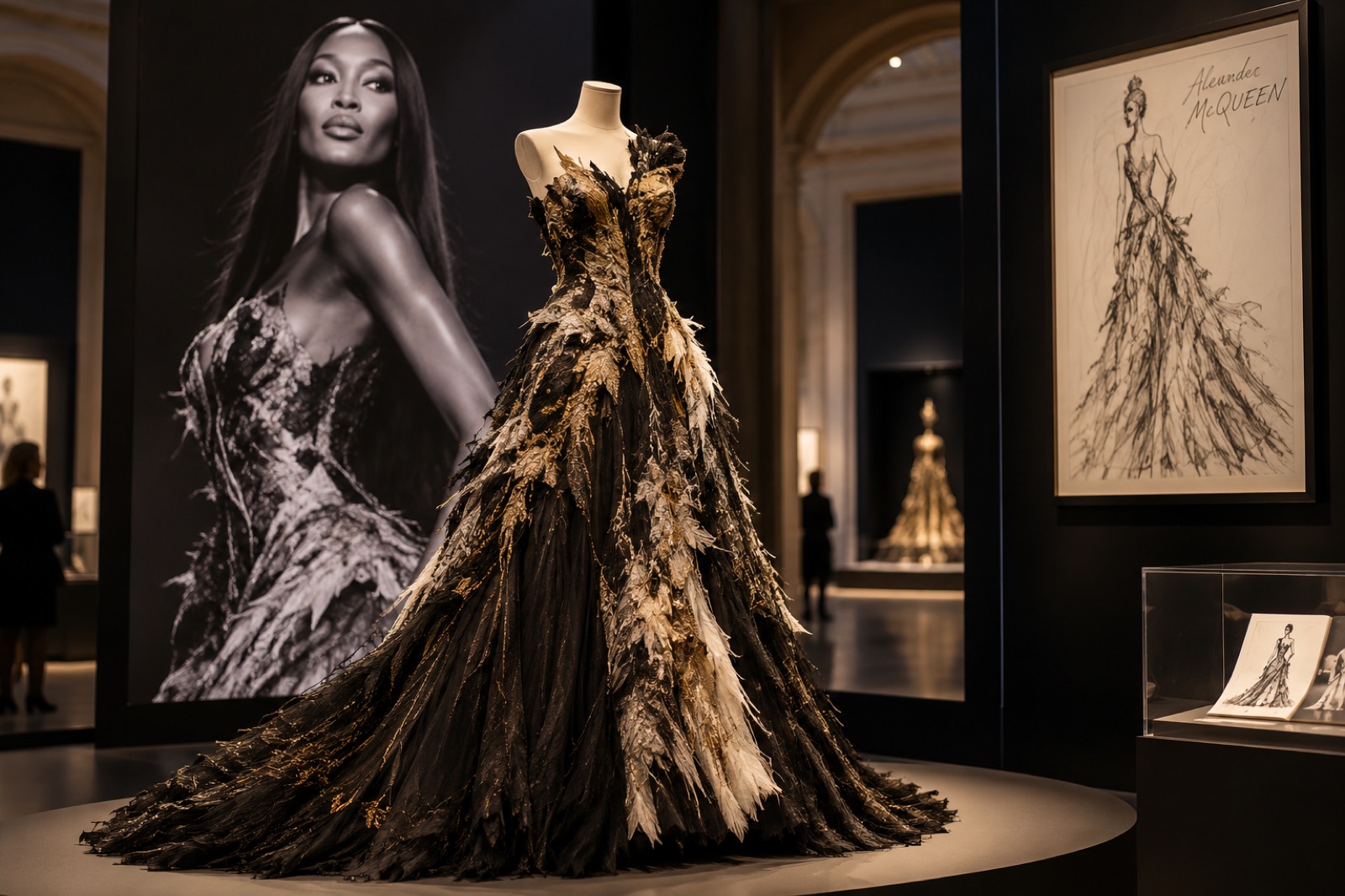
A bodice, a skirt and a pair of Armadillo heels walk into a New York saleroom carrying an estimate of $600,000 to $1 million.
There is no punchline. There is a paddle. Fair Warning scheduled the sale of a rare Alexander McQueen ensemble worn by Naomi Campbell for September 17, 2026, as part of The Impossible Couture Collection, a New York sale devoted to rare fashion and couture. The official auction information lives at fair-warning.com.
Before anyone files this under the million dollar dress, three corrections. It is an estimate, not a result. It is a range, and the floor of that range is $600,000. And it is not a dress.
What Is Actually in the Alexander McQueen Lot
Fair Warning identifies the piece as a custom version of Look 1 from McQueen's Spring/Summer 2010 Plato's Atlantis collection. The lot is a bodice, a skirt and heels. Campbell wore it for Fashion for Relief in 2010.
The heels are the part collectors circle twice. They are McQueen's Armadillo footwear, and Fair Warning states the shoes come from Campbell's personal collection.
So the value engine, in one line: a documented designer, a documented collection, a documented wearer, a documented night. Now notice what the auction house does not do. It does not assign a specific dollar amount to each element of that history. Provenance gets sold as a bundle, never as a line item, which is exactly how the people writing the catalogue prefer it.
When Does Fashion Become Art?
That is the real question under the price tag, and there is no universal rule that flips a garment into art. No threshold, no certificate, no committee.
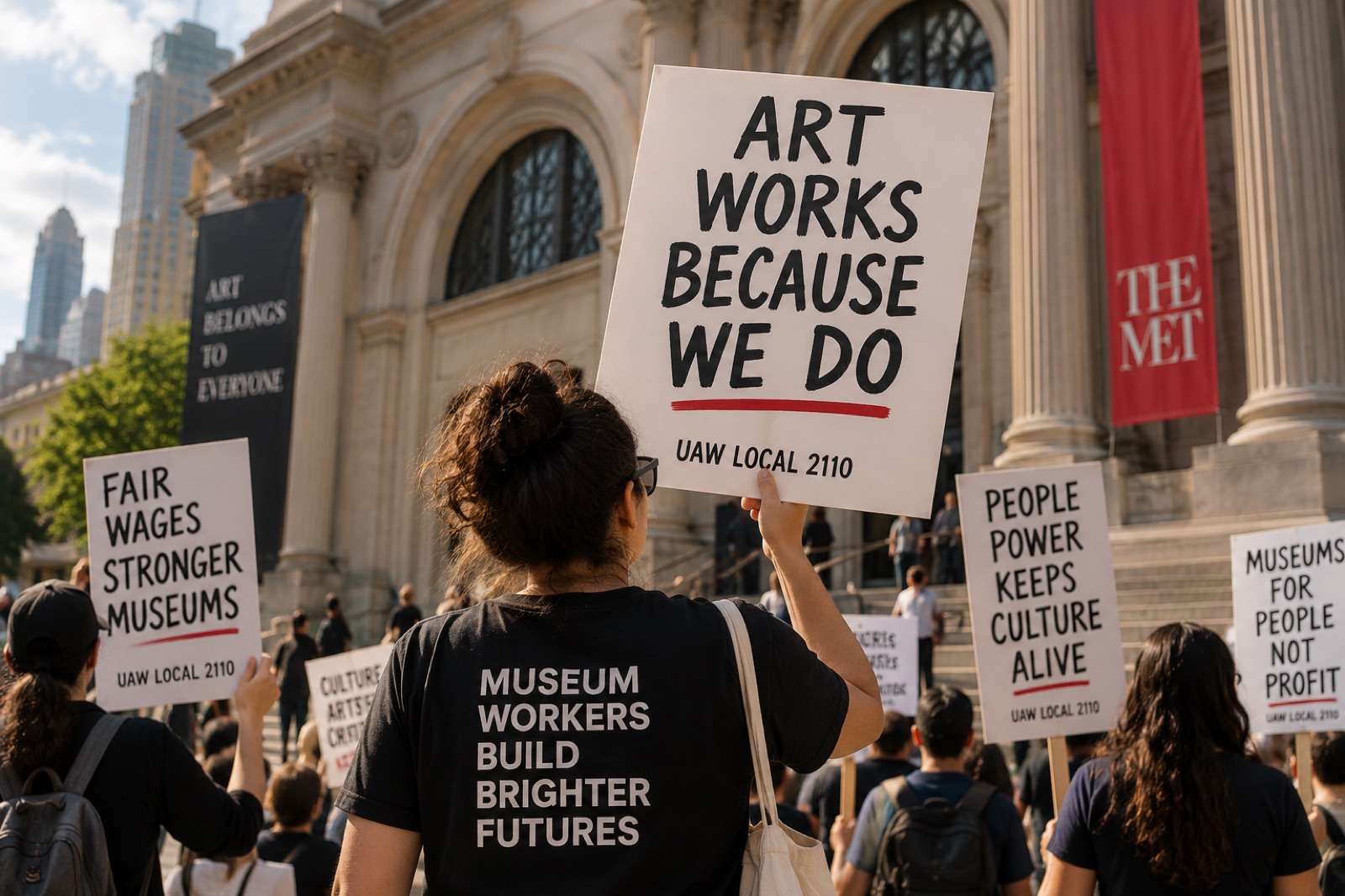
What exists instead is institutional behavior. In 2011, The Metropolitan Museum of Art presented Alexander McQueen: Savage Beauty, featuring approximately 100 ensembles and 70 accessories. The official exhibition listing is still posted. London's Victoria and Albert Museum later presented Savage Beauty in 2015, and the V&A reports that 493,043 people attended during its 21-week run, making it the museum's most visited exhibition at that time.
Sit with that second number. Nearly half a million people, in London, over a 21 week run, turned out to look at clothing behind glass. Museums do not generate that kind of line for an accessory category. They generate it for an artist.
None of which proves that every McQueen garment is fine art. It does establish that his work has been collected, studied and exhibited by major museums, which happens to be the same resume a painter needs. Institutions confer status before markets price it, the same way a serious museum program anchors a city's art scene long before the local sales catch up.
Why the $1 Million Number Matters
Here is the twist, and it is the least glamorous sentence in this piece. An auction estimate and an actual sale price are two different things.
Fair Warning's estimate for the Naomi Campbell McQueen ensemble was $600,000 to $1 million. The actual price gets determined when bidding takes place. That is it. That is the whole mechanism.
An estimate is a hypothesis with a marketing budget. A hammer price is a fact. Every headline that converts the first into the second is describing a future event in the past tense, and the gap between what a thing is asked to fetch and what it clears is the oldest tension in the collectibles business. It is the same gap that runs underneath the economics of an art fair, where the wall label and the wire transfer are rarely the same number.
What This Means for Collectors
Strip the romance and the lot resolves into four documented claims stacked on top of each other:
- A designer with major museum exhibitions at The Met and the V&A.
- A specific collection, Plato's Atlantis, and a specific look from it.
- A named wearer and a named occasion, Naomi Campbell at Fashion for Relief in 2010.
- Armadillo heels that Fair Warning says came from Campbell's own closet.
What is not in the lot is a valuation method. The auction house does not publish what the Campbell association is worth versus the Armadillo shoes versus the Plato's Atlantis lineage. That arithmetic happens in the room, in real time, between two people who both want the same bodice.
The Takeaway
The honest version of this story is quieter than the headline. A rare piece of vintage couture received an auction estimate reaching seven figures. That is not the same as a dress selling for a million dollars, and the difference is not a technicality. It is the entire story.
What has genuinely changed is the object's job. This ensemble is no longer functioning only as clothing. It is being catalogued, preserved, exhibited and offered to collectors as a historically documented piece of fashion, which is a description of an artifact, not an outfit.
Whether fashion is art remains subjective and probably always will. Whether this particular bodice will ever be worn again is not subjective at all.
Frequently Asked Questions
Has the Alexander McQueen outfit sold for $1 million?
No. Fair Warning estimated it at $600,000 to $1 million. The auction was scheduled for September 17, 2026.
Did Naomi Campbell wear the McQueen ensemble?
Yes. Fair Warning states that Campbell wore the custom ensemble for Fashion for Relief in 2010.
Are the Armadillo shoes included?
Yes. The lot includes heels associated with McQueen's Armadillo design, which Fair Warning says come from Naomi Campbell's personal collection.
Is fashion considered art?
There is no universal definition that makes all fashion art. However, major museums collect and exhibit fashion, and both The Met and the V&A have staged major exhibitions devoted to Alexander McQueen.
Lucas D. Boccheciampe
Publisher of The Standard · Broker, Vantage Luxury Real Estate · Key Biscayne