Who Is Flávio Bolsonaro? Why Brazil's Runoff Matters for Miami
Flávio Bolsonaro leads Lula into Brazil's October 25 runoff. Who he is, why markets rallied after round one, and what his win could mean for Miami.
 By Lucas D. Boccheciampe · October 15, 2026
Brazil has not picked a president yet. Its stock market already threw a party anyway.
On Monday, October 5, the day after the first round, the Ibovespa closed at a record 206,911.89 points, up 7.70% in a single session. The dollar fell 4.12% against the real, closing at 5.0022 reais. In New York, the iShares MSCI Brazil ETF jumped 12.57%. One country, one Sunday, one very loud Monday.
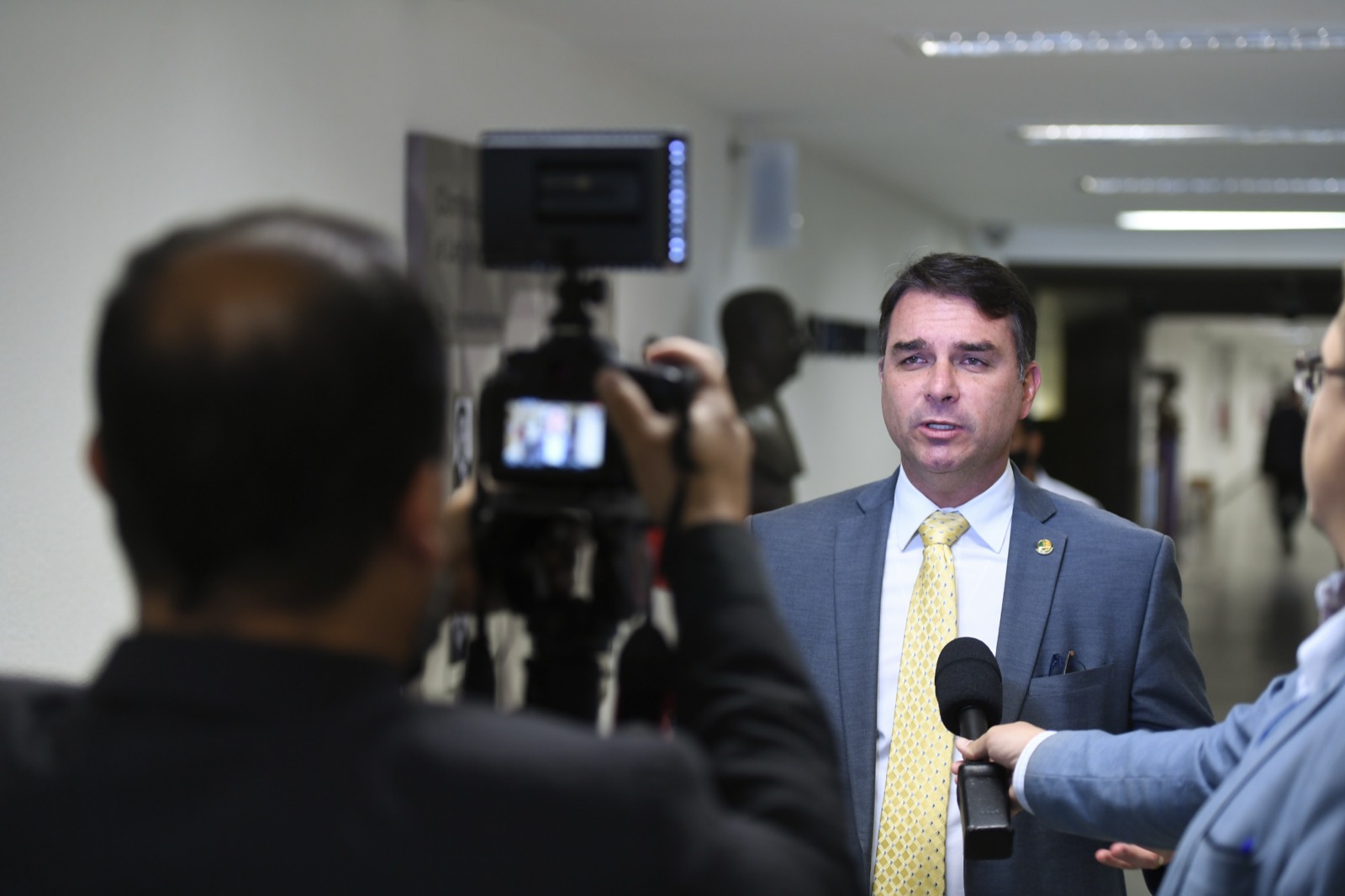
The reason has a famous last name. Flávio Bolsonaro, a sitting senator and the son of former president Jair Bolsonaro, finished first with 47.03% of the valid vote. President Luiz Inácio Lula da Silva took 45.16%. Neither cleared 50%, so the two meet again in a runoff on Sunday, October 25.
That is ten days from now. And Miami should be paying closer attention than almost anyone outside Brazil.
Who Is Flávio Bolsonaro?
First, a correction to the way this race gets talked about in Miami. Jair Bolsonaro is not on the ballot. He was declared ineligible until 2030 back in 2023, and in September 2025 he was sentenced to 27 years for his role in the coup plot. He is under house arrest. The Bolsonaro on the ballot is his son.
Flávio Bolsonaro was born on April 30, 1981, in Resende, in the state of Rio de Janeiro. He is a lawyer by training, with a law degree from Candido Mendes University. He has also spent his entire adult life in politics:
- Rio de Janeiro state deputy from 2003 to 2019, elected four times (2002, 2006, 2010, 2014).
- Rio mayoral candidate in 2016, finishing fourth with 14% of the vote.
- Federal senator since February 2019, elected in 2018 with 4,380,418 votes.
- Presidential candidate since December 5, 2025, when he announced on social media that his father had chosen him. The Liberal Party's national president, Valdemar Costa Neto, backed the choice.
His running mate is federal deputy Alfredo Gaspar. Lula runs again with Vice President Geraldo Alckmin.
Why Flávio Bolsonaro Matters
Think of it as the family business with a new CEO. The brand is the same. The resume is different.
Flávio carries his father's name and most of his platform, but he arrives as a 23-year legislator rather than a former army captain. His campaign leans hard on public security: a twelve-point plan that would designate criminal groups as "narcoterrorist organizations" and build maximum-security prisons modeled on El Salvador's. On the economy, he promises lower inflation, spending cuts, a public debt ceiling and a stronger critical minerals sector. Abroad, he wants closer ties with the United States, Argentina and Israel, would keep a pragmatic relationship with China, and has said he would reassess Brazil's BRICS membership.
That is why he matters beyond Brazil. Brazil accounts for about 31% of Latin America and the Caribbean's GDP. Whoever runs it sets the tone for the region's largest economy, its currency, and its relationship with Washington. All three end up, sooner or later, on a Miami closing statement.
Brazil's 2026 Election: The First-Round Numbers
The scoreboard from October 4:
- Flávio Bolsonaro (PL): 56,104,503 votes, 47.03%
- Lula (PT): 53,879,538 votes, 45.16%
- Abstention: 21.08%, the highest since 1998
The right did not only win the top line. Bolsonaro's Partido Liberal will hold roughly 28 of 81 Senate seats and 121 of 513 seats in the lower house, the largest bloc in each chamber starting next year.
And the early runoff polling leans the same way. Datafolha, released October 8, has Flávio at 52% to Lula's 48% of valid votes, a gap at the very edge of its two-point margin. Quaest, released October 14, has it 46% to 44% of all respondents, which it calls a technical tie. Translation: a lead, not a lock.
Why Wall Street Is Cheering a Bolsonaro Win
Markets do not vote on personalities. They vote on budgets.
Brazil's core vulnerability, as Americas Quarterly editor Brian Winter puts it, is a nominal budget deficit that recently approached 10% of GDP. Flávio's pitch, a debt ceiling plus spending cuts, speaks directly to that anxiety. Investors expect his party's strength in Congress to pave the way for fiscal adjustment.
Winter's read on the mood: "There will be excitement in markets, and it will be largely justified."
Then there is Washington. Brazil has faced considerable U.S. tariffs under the second Trump administration, and Lula has called them political interference. Flávio favors stronger ties with the United States and could join Trump's "Shield of the Americas" security initiative, which Lula declined. For a city whose economy runs on the Brazil to Miami corridor, that is not a foreign policy footnote. That is the plumbing.
That is the hope, and right now a lot of Brazilians are holding it.
The Case for Caution
A good analyst holds the champagne until the cork is actually out.
The skeptics are not hard to find. Monica de Bolle of the Peterson Institute put it bluntly: "No fiscal adjustment is going to happen." Alessandra Ribeiro of Tendências Consultoria calls some of the promised fiscal adjustment measures "not very feasible" and expects debt to stabilize only in the medium term. She also says the center-right parties in Congress lack unity of purpose.
The campaign carries baggage too. Court documents unsealed in September implicated Flávio in a multibillion-dollar fraud investigation, per CFR. He has said he would seek an amnesty for his father and others convicted over the January 2023 riots, or a pardon if amnesty fails. Winter adds one more wild card: a rumored trove of damaging evidence, the so-called "bomba," that he says may or may not be an urban myth.
And Lula is not a candidate you count out. Polls had the race roughly even before the first round, and the result still surprised. Polls can be wrong in both directions.
How Brazil's Election Could Move Miami Real Estate
Here is where the macro story lands on our side of the Atlantic.
Foreign buyers accounted for 15% of residential purchases in South Florida in 2025, about seven times the national rate, according to MIAMI Realtors. Among foreign buyers in Miami, Brazil ties Mexico at 7%, behind only Colombia and Argentina, according to a March 2026 Funds Society report. One broker quoted in that report said Brazilians and Colombians are currently the most active investors.
Now do the currency math. A Brazilian buyer looking at a $1 million Miami condo needed about R$5.22 million on Friday, October 2. After Monday's rally, at 5.0022 reais per dollar, that same condo cost roughly R$5.0 million. Nobody changed the asking price. It just got about R$220,000 cheaper in reais over a weekend.
A stronger real, a richer stock portfolio, and a government that markets read as friendlier to capital: that is the combination that historically gets Brazilian buyers on a plane to MIA. During the last Brazilian wave, the money concentrated in Brickell and downtown towers. The route is well worn.
The twist is that the old playbook also had a second chapter. Brazilians historically bought Miami as a hedge against trouble at home. If home looks less troubled, some of that capital stays home and chases a record-setting Ibovespa instead. Hope in São Paulo can mean more Brazilian money in Brickell, or more Brazilian money in Brazilian stocks. Probably both.
What This Means for Buyers and Sellers in Miami
- Sellers in Brazilian-favored submarkets (Brickell, Sunny Isles, Aventura, Key Biscayne): your buyer pool may be getting a currency tailwind. Watch who is touring, not just who is offering.
- Brazilian buyers already shopping: the real moved more than 4% in one day on one headline. It can move the other way on the next one. If the exchange rate matters to your budget, it deserves a plan, not a hunch.
- Local buyers competing for the same inventory: if the runoff goes the way the polls lean, expect more international competition in the segments Brazilians historically target. Our Key Biscayne vs. Brickell comparison is a good map of where that money tends to land.
- Pre-construction: foreign demand has always been a pillar of Miami new development. Track the projects on our New Developments page against the October 25 result.
The Takeaway
The market has made its call, and it is a hopeful one. A record Ibovespa, a stronger real and a right-leaning Congress add up to a Brazil that investors think is getting its fiscal house in order, with a president who wants to be closer to Washington.
For Miami, that hope has a price tag in reais. A stronger currency makes every Brickell condo cheaper for a buyer in São Paulo, and confidence tends to travel north with a suitcase.
But it is still a race within a few points, with a sitting president, a rumored bombshell and ten days to go. Elections are not priced in until they are counted.
Brazil votes on October 25. Miami finds out on October 26, when the phones either ring or they don't.
Frequently Asked Questions
When is Brazil's 2026 presidential runoff?
Sunday, October 25, 2026, between Flávio Bolsonaro and President Lula.
Who is Flávio Bolsonaro?
The son of former president Jair Bolsonaro, a lawyer born in 1981, a Rio de Janeiro state deputy from 2003 to 2019, and a federal senator since 2019. He has been the right's presidential candidate since December 2025.
Is Jair Bolsonaro running for president in 2026?
No. Jair Bolsonaro was declared ineligible until 2030 and was sentenced in 2025 to 27 years for his role in the coup plot. His son, Senator Flávio Bolsonaro, is the candidate.
What were the first-round results?
Flávio Bolsonaro won 47.03% of the valid vote and Lula 45.16%. Since neither passed 50%, the race goes to a runoff.
How did markets react?
On October 5, the Ibovespa rose 7.70% to a record 206,911.89 points and the dollar fell 4.12% against the real, to 5.0022 reais.
How important are Brazilian buyers to Miami real estate?
Brazil ties Mexico at 7% of foreign buyers in Miami, according to a March 2026 report, and foreign buyers made up 15% of South Florida residential purchases in 2025 per MIAMI Realtors.
Lucas D. Boccheciampe
Publisher of The Standard · Broker, Vantage Luxury Real Estate · Key Biscayne