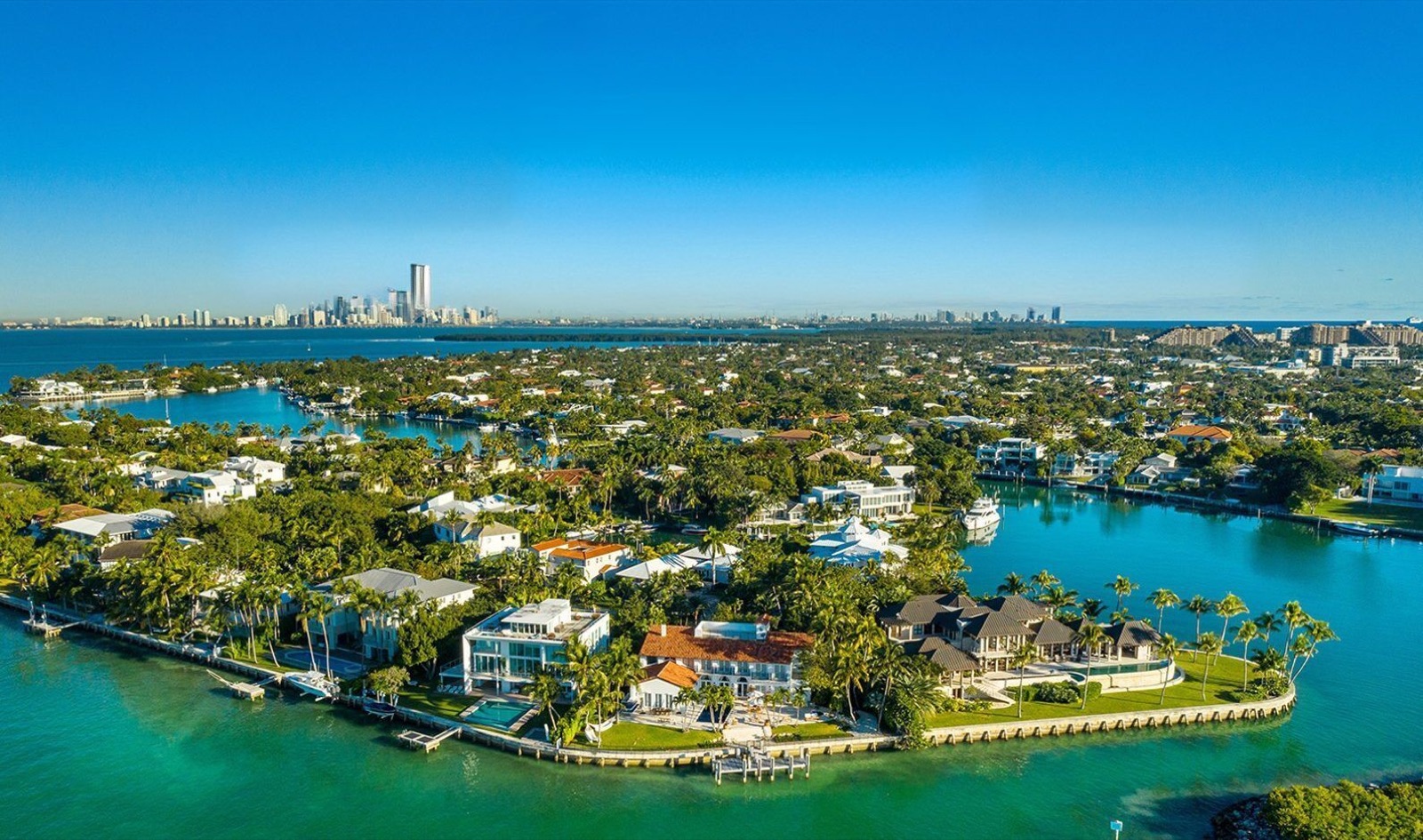
Key Biscayne sits at the end of the Rickenbacker Causeway, seven miles from downtown Miami and, somehow, a full time zone away in temperament. The island keeps its own clock. It always has.
Part of that is by choice. The Village of Key Biscayne incorporated in 1991, the first new municipality in Miami-Dade County in more than fifty years, and residents still talk about the vote as the day the island took the wheel. It runs its own police and fire departments, holds one of the lowest municipal tax rates in the county, and at its core stays a small place where the longtime families tend to know each other.
The numbers behind the postcard
The postcard is real, but the data is more interesting. The 2020 Census counted 14,809 residents packed into a Village footprint of about 1.2 square miles. By 2024, 58.1% of residents were foreign-born and the median age was 42.2. That is not a retirement colony, and it is not a young-professional scene. It is international, family-first, and solidly middle-aged, which is a rarer combination than it sounds.
A village, not a suburb
Geography does most of the explaining here. The Village occupies roughly 1.2 square miles at the center of a barrier island about four miles long, bordered to the north by Crandon Park and to the south by Bill Baggs Cape Florida State Park. There is simply nowhere to sprawl, and that is the entire point. Island living here means a walkable town center, a single main road, and a coastline that never filled up with towers the way Miami Beach did.
The people who grew up here get their own nickname: "Key Rats," which sounds like an insult and functions as a badge. Longtime resident Betty Sime Conroy, who helped organize the 1991 incorporation push, put the economics plainly: property values climbed once the Village ran its own services, and something as small as a new dog park was enough to pull people over from the mainland.
An international community, in the details
Key Biscayne does not look demographically like the rest of Miami-Dade, and the details are where it gets specific. Census-derived data compiled by Data USA puts the foreign-born share at 58.1%, close to four times the national rate of about 14%. Census Reporter figures set it even higher against the broader metro, where the foreign-born rate sits nearer 42%.
Spanish is the island's default. Census-based estimates show 72.9% of households speak Spanish at home, against 17.2% that speak only English. Median household income reached $181,505 in 2024, according to Florida-Demographics.com's compilation of Census figures, more than double the Miami metro overall. The community skews Hispanic, roughly 70% to 74% depending on the year and the source, and blends longtime Cuban-American and South American families with newer arrivals chasing the same two things: the schools and the security.
The schools do the heavy lifting
Ask why families choose the island over a dozen other Miami options and the answer is usually one building. Key Biscayne K-8 Center traces back to Key Biscayne Elementary School, which opened in 1952, not long after the Rickenbacker Causeway made real residential development possible. Today it enrolls roughly 880 to 920 students and quietly outperforms both the district and the state.
In the 2024-2025 school year, 87% of third graders were proficient in English Language Arts against 60% district-wide, and 93% were proficient in math against 69% district-wide, according to SchoolDigger's reading of Florida Department of Education data. Only about 7% to 8% of students qualify for free or reduced-price lunch, a number that says as much about the island's affluence as any listing price. The school also offers a Gifted and Talented program and a Cambridge International curriculum, per GreatSchools, and lands in the top 20% of Florida elementary schools.
Two parks, and nothing to build between them
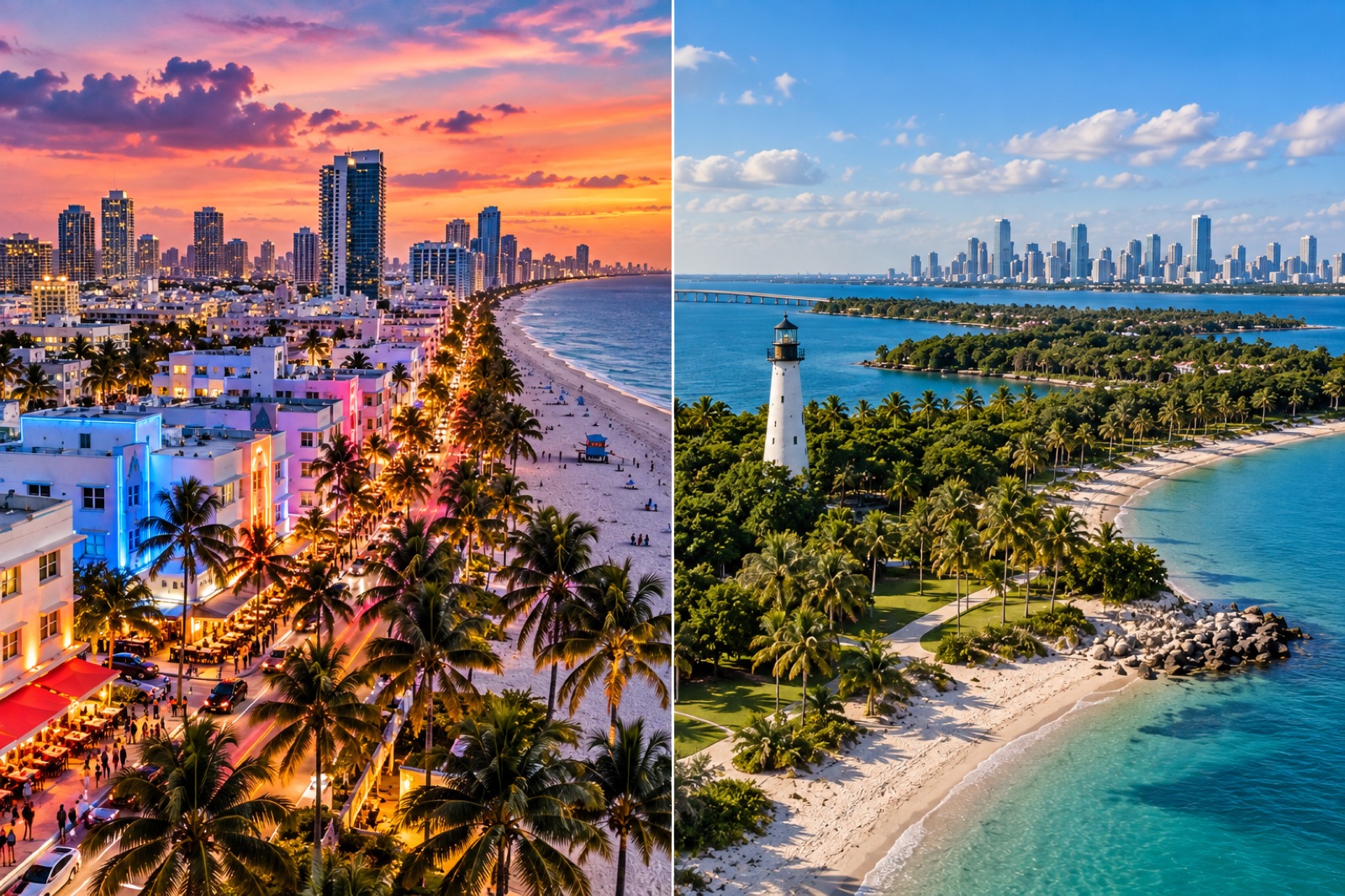
The island's bookends are as central to daily life as any restaurant. Crandon Park, at the north end, sits on land the Matheson family donated to Dade County in 1940 in exchange for the county's promise to build the causeway. It now holds roughly two miles of beach along with tennis courts, a marina, and a golf course. At the south end, Bill Baggs Cape Florida State Park protects 1.25 miles of natural beach that Dr. Stephen Leatherman, better known as "Dr. Beach," has repeatedly ranked among the top ten in the country, next to the 1825 Cape Florida Lighthouse, the oldest standing structure in Miami-Dade County.
Because both ends are permanently protected as parkland, the Village could never build out its own coastline. Residents get two very different wild spaces holding up a compact, low-rise core, a setup you will not find this close to a major downtown anywhere else.
Slower, on purpose
Ask what changed after 1991 and almost everyone lands on the same word: control. Local government meant the Village set its own pace, protected its low-rise character, and kept the beaches out of the hands of hotel developers. It has not frozen in time. New development, resort projects, and international buyers have all reshaped stretches of the island over the past two decades. If you are watching how that pressure plays out in prices, the Key Biscayne market splits into two very different segments.
But the underlying rhythm holds. A school where parents know the teachers. A beach at each end of one road. A community still small enough to feel like one.
Key Biscayne is seven miles from downtown Miami, and on most days, that is exactly six and a half miles too close for comfort.
Lucas D. Boccheciampe
Publisher of The Standard · Broker, Vantage Luxury Real Estate · Key Biscayne