Miami Seaquarium Redevelopment: What the Filings Actually Say
 By Lucas D. Boccheciampe · July 23, 2026
On July 1, a clerk stamped RECEIVED on a 22-page application at Miami-Dade County headquarters. Nobody held a press conference. There was no rendering, no ribbon, no drone video with a piano soundtrack. But that stack of paper, Application CDMP20260007, quietly proposes the biggest change to Key Biscayne's front door since they built the causeway.
The Standard pulled the filing. Here is what the paperwork says that the press release never did.
First, the numbers
The application covers 36.212 acres on Virginia Key, the site your kids know as the Miami Seaquarium. It asks the county to redesignate the land from Parks and Recreation to a new Special District, rezone it to a Retail Entertainment District, and cap development at a floor area ratio of 1.5.
Run the math on that FAR and you get the number that matters: 2,366,106 square feet of maximum proposed development. For scale, that is roughly two Dolphin Malls stacked on the island next to ours.
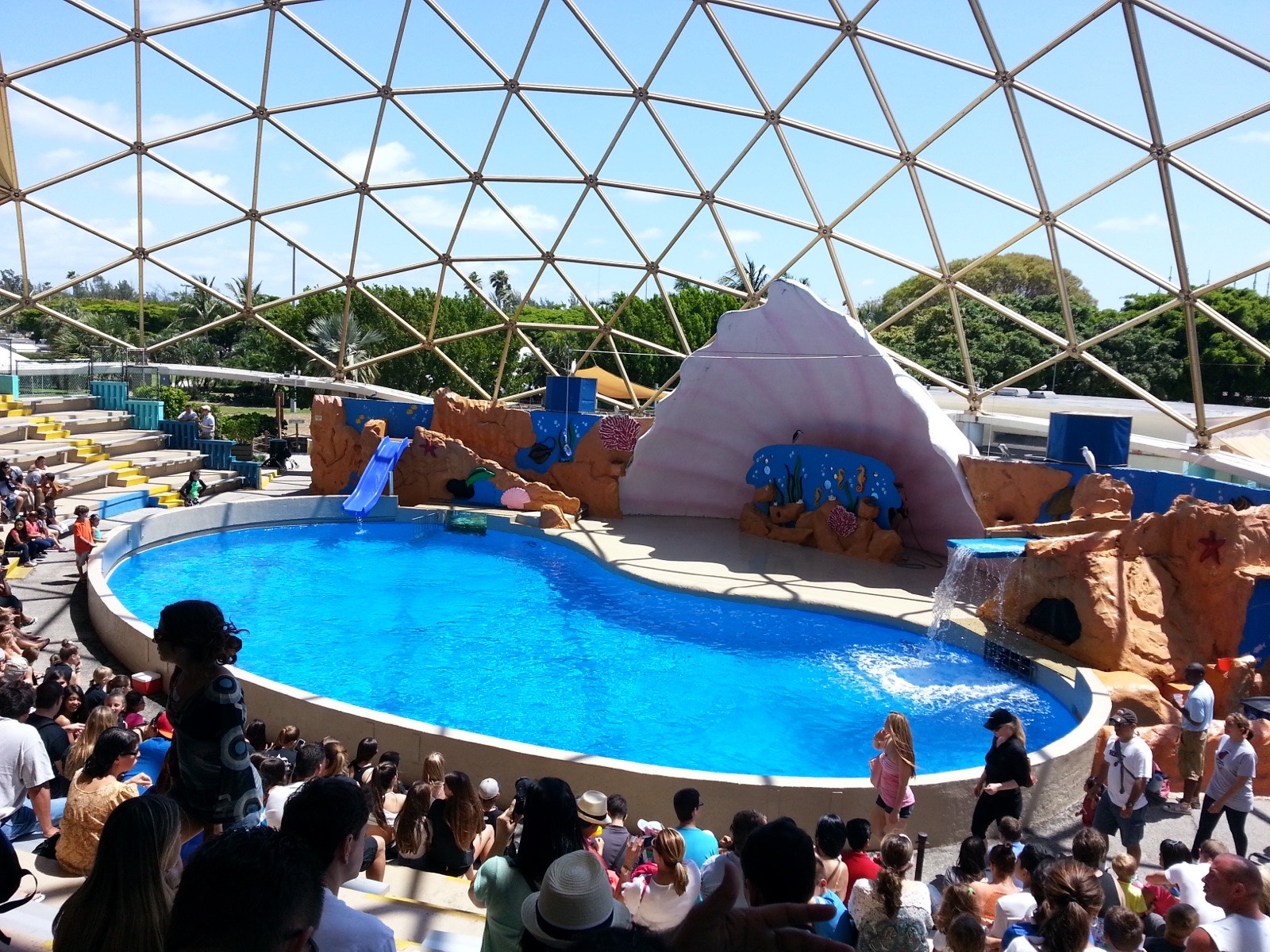
The program table inside the filing reads like this: 942,838 square feet of aquarium, experiences and attractions. 692,000 square feet of marina dry stack towers. 374,600 square feet of event space, which is where the 1960 Golden Dome survives. 120,000 square feet of research and education. Retail and restaurants fill in the rest.
And the berths: 877 total. That is 552 dry stack plus 325 wet slips, per the county's own table. (The separate environmental application says 500 dry. The two filings do not agree yet, which tells you how fresh this is.)
Wait, who filed this?
Technically, Miami-Dade County filed it. The applicant of record is the Parks Department. The beneficiary is Resilient Aquarium LLC, an affiliate of Terra Acquisitions Florida, one hundred percent owned by David Martin, Terra's co-founder and CEO. The filing says so on page four.
How Martin got here is its own story. The Seaquarium's operator was being evicted by the county, filed Chapter 11 in March 2025, and its lease was sold through a Delaware bankruptcy court. Martin's entity won it for $22.5 million in October. No county RFP, no bidding war on Biscayne Boulevard. A bankruptcy judge in Wilmington decided who controls the most visible 36 acres in Biscayne Bay.
Then in December, county commissioners unanimously approved a term sheet directing the Mayor to negotiate a new lease. The headline terms: a term stretching 99 years, a minimum investment of $100 million, guaranteed rent of $1.1 million a year, and the county collecting 5 percent of the marina's gross revenues. WLRN and The Real Deal have framed that last one as Martin keeping 95 percent of slip profits. The term sheet is actually about revenues, not profits, but either way the county is a minority participant in its own waterfront.
The fall pitch versus the summer filing
Last fall this project was sold to the public as a love letter. A "Fisherman's Village" of restaurants and shops. A fully accredited aquarium with no captive dolphins. A $100 million investment in a site everyone agreed had become an embarrassment. Commissioners applauded. Editorial pages exhaled.
The summer filing is the same project the way a house cat is the same as what's in the lion enclosure. The village is still in there, but it now travels with 2.37 million square feet of entitlement, dry stack towers taller than anything on Virginia Key, and a marina engineered for vessels up to 200 feet, per the environmental application reported by WLRN. About 90 of the wet slips are sized for yachts over 80 feet. Fuel dock: over 19,000 square feet. It would be the largest marina in Miami-Dade County.
There is one problem with the megayacht thesis, and Friends of Biscayne Bay said it out loud: the megayacht business lives in Fort Lauderdale because Biscayne Bay is, on average, about six feet deep. You do not park a 200-foot boat in six feet of water. You dredge. And dredging is where this project meets the State of Florida.
Six pages of questions
The Florida Department of Environmental Protection reviewed the marina application and sent back a six-page list of questions: impacts to protected wetlands, seagrass and bay bottom, how much coral might be damaged, dredging detail, sewage and fuel spill management, and whether the county considered alternative designs at all. That is not a rejection. It is also not what a slam dunk looks like.
Meanwhile the county's own Shoreline Development Review Committee, the body that normally examines anything built on the bay, has not reviewed the plans. The big environmental groups have stayed unusually quiet, holding Martin to his public promises. And The Real Deal has raised the question of whether a project this size on county parkland triggers the charter requirement for a voter referendum. Nobody has answered that one yet.
What this means on our side of the bridge
Be honest about the duality. A world-class aquarium, a research campus, a real dining district and the county's premier marina, ten minutes from your driveway, is the strongest amenity story Key Biscayne has ever been handed. Waterfront amenities of that caliber have a way of showing up later in property conversations, and every buyer we work with already drives past that site twice a day.
That is also the problem. The filing's own traffic study caps the project at 1,586 net new PM peak-hour trips. Every one of them merges into the Rickenbacker Causeway, the only road on and off this island, before a single construction barge shows up for a decade of building. Key Biscayne has spent years fighting for causeway sanity. This application is the causeway conversation now.
The Standard will be reading every page of this process, the way we read every recorded document on the island for The Standard Index. The application is under review. The hearings are coming. The final lease is still being negotiated, which means the terms are still being written.
The sea lions worked for fish. The next act at 4400 Rickenbacker works for gross revenues, and the county's cut is five percent. On an island with one road, read the paperwork before you clap.
Sources: Miami-Dade CDMP Application CDMP20260007 and its concurrent zoning application Z2026000106 (county EnerGov portal); Miami-Dade Resolution R-1177-25 and lease term sheet, adopted December 2, 2025; reporting by WLRN (Jenny Staletovich), The Real Deal, Miami New Times, NBC6 and Islander News.
Photo: the Miami Seaquarium's Golden Dome, Virginia Key. Pietro, via Wikimedia Commons, CC BY-SA 3.0. Image cropped and resized.
Lucas D. Boccheciampe
Publisher of The Standard · Broker, Vantage Luxury Real Estate · Key Biscayne